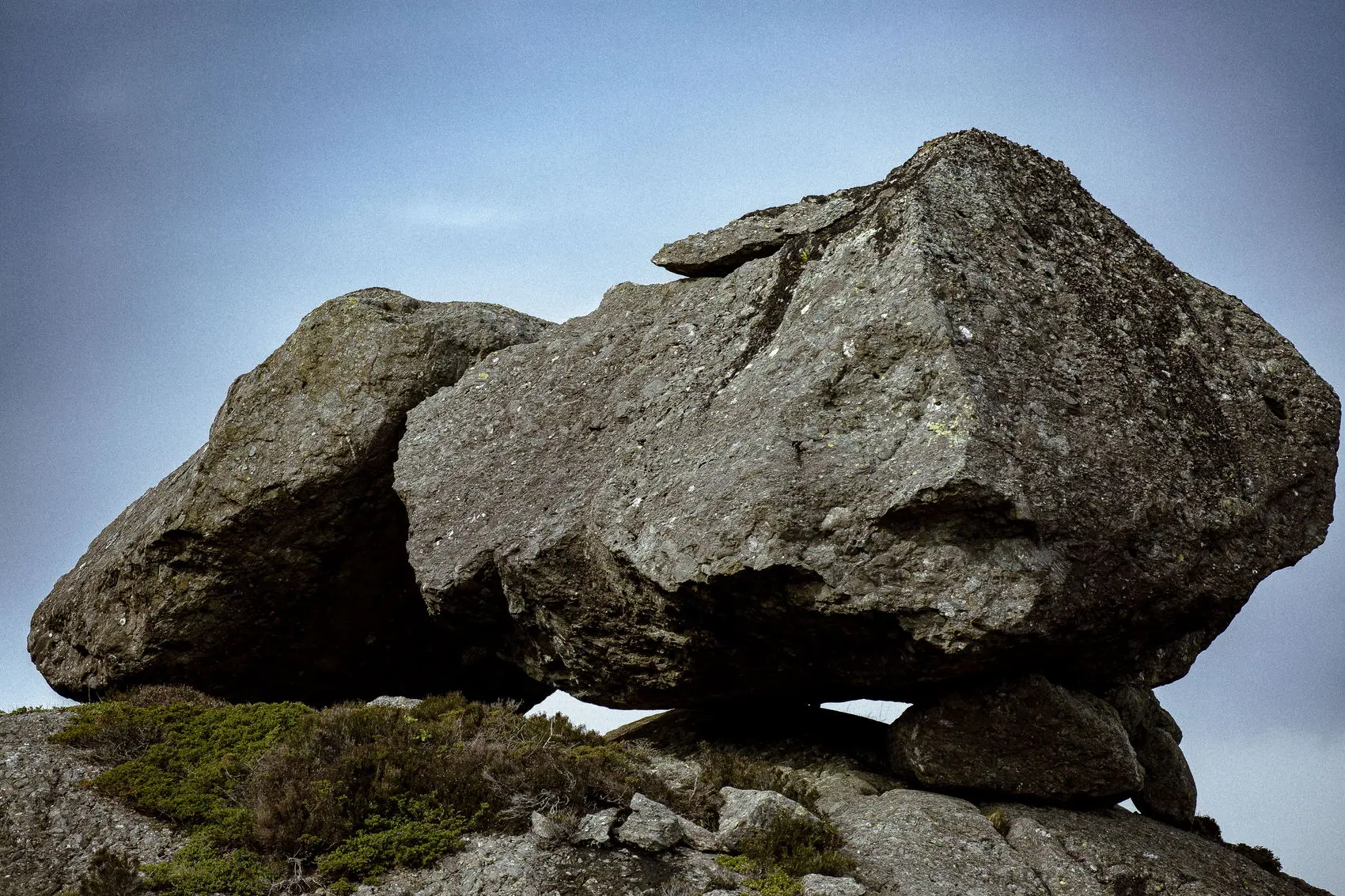

On Steinsundøyna, both along the road and out in the terrain, you can notice large stones, often several tens of cubic metres in size. They are scattered across the landscape, yet still form a distinct belt about 1–2 km wide and nearly 15 km long, oriented north–south.
These stones mark the westernmost extent of the Younger Dryas moraine in Norway. The moraine was deposited towards the end of the last Ice Age, about 12,500–11,600 years ago, when the ice front stood still here for a time.
At that time, sea level was around 25 metres higher than it is today. Waves and ocean currents have therefore probably washed away much of the finer material in the moraine, such as sand and gravel, leaving only the largest stones that we see in the landscape today.